For the past decade, the argument for building a business website usually centered around “looking professional.” Marketing agencies would tell you that a website was a digital business card, a place to park your logo and an “About Us” page. But in 2026, the stakes have fundamentally changed.
If you are wondering why you need a website when your Instagram is thriving or your TikTok videos are getting views, you are asking the right question. However, the answer is no longer about aesthetics; it is about survival in an ecosystem dominated by Artificial Intelligence (AI) and algorithm-driven discovery. The rules of how customers find businesses have been rewritten over the last two years.
Here is why relying solely on social media is a dangerous game in 2026, and why a dedicated website is the only way to future-proof your digital presence.
The New Reality: Social Platforms Are Rented Land (And the Rent Went Up)
Many small business owners have fallen into a comfortable trap: building their entire lead generation machine on social media. But social platforms are rented land. You do not own your audience, and you do not control the rules of distribution. Over the past few years, the “rent” for this land has skyrocketed in the form of plummeting organic reach. Platforms have actively throttled how many of your own followers see your posts unless you pay to boost them.
Worse than falling reach is the sheer vulnerability of building on someone else’s platform. Algorithm shifts can erase a reliable lead source overnight. A single flag, a mass reporting campaign by a competitor, or an automated moderation error can result in a suspended account with zero recourse for appeal. If your entire business lives on a social platform and that platform decides you violated a vague term of service, your business disappears instantly. A website is a piece of digital real estate that you actually own, immune to the whims of social media billionaires.
AI Search Changed the Game: The Visibility Crisis
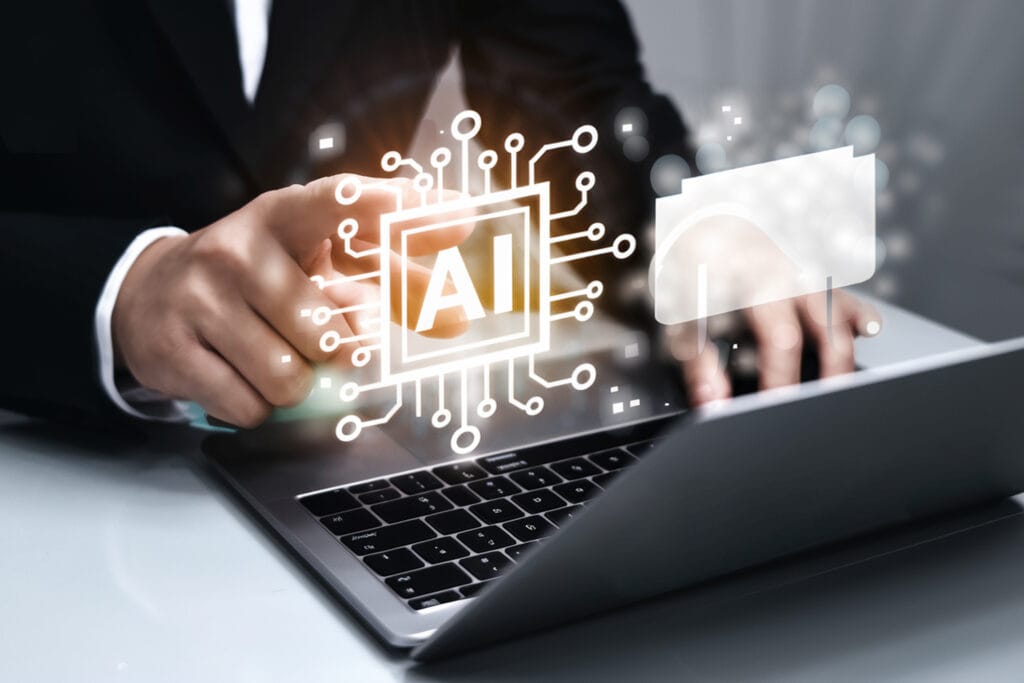
The most critical shift in 2026 is how people search for information. Consumers are no longer just typing keywords into traditional search engines; they are having conversational queries with AI systems like ChatGPT, Google’s AI Overviews, and Perplexity.
Here is the problem: these AI systems synthesize answers by pulling data from crawlable websites. If your business information, pricing, and services are locked behind the walled gardens of Instagram or a closed Facebook group, you are largely invisible to the AI tools that millions of people now use daily to find local services and products. AI engines cannot “watch” your TikToks to understand your service offerings. They need structured text, clear headings, and crawlable data. If you don’t have a website, your competitors who do will be the only ones recommended by the AI.
The "Link-in-Bio" and Google Business Profile Objection
At this point, you might be thinking: “I don’t need a full website. I have a Google Business Profile (GBP) and a Linktree in my bio. Isn’t that enough?” It is a fair objection, and it is exactly what many modern founders weigh. However, treating a GBP or a link-in-bio as a replacement for a website is like treating a directory listing as a storefront.
The limits of a Google Business Profile
A GBP is vital for local SEO, but it is heavily restricted. You cannot fully brand it, you cannot control the narrative if a negative review hits, and you cannot build deep content clusters (like FAQs or case studies) that prove your expertise to high-paying clients. Furthermore, Google frequently suspends GBPs for minor verification errors, leaving you stranded.
The limits of a link-in-bio
Tools like Linktree are just routing mechanisms. They do not build domain authority. They do not capture organic search traffic. When someone clicks your link-in-bio, they are usually directed to a disjointed mix of Google Docs, payment forms, or scheduling apps. It creates friction, and friction kills conversions. A proper website unifies your GBP, your social presence, and your booking systems into one frictionless, high-converting ecosystem.
The Cost Objection is Weaker Than Ever
Five years ago, a custom website might have felt like a massive capital expense. Today, the cost objection is weaker than ever. The barrier to entry has plummeted thanks to advanced visual builders, AI-assisted design tools, and scalable hosting options.
You no longer need to spend $15,000 to get a high-performing, fast-loading, minimalist website. In 2026, a professionally designed, fast-loading, and SEO-optimized foundational website typically ranges from $2,500 to $5,000, depending on the complexity of your integrations.
Your next steps
If your business is currently relying on rented land, it is time to build your own asset. Start by registering your domain name and defining the core action you want users to take (e.g., booking a call or buying a product). Then, invest in a clean, fast-loading site that clearly states your value proposition. In the age of AI search, existing on a platform is not enough; you must own your space on the web.